Ganghwa Island sits close enough to Seoul that day-trippers often assume a quick subway-and-bus combination will do the job. It can, but only if the itinerary respects how the island's bus routes are actually laid out: a dense network around Ganghwa-eup (the main town) that thins out fast once you head toward the dolmen sites, the northern coast, or the western beaches. This guide covers the realistic version of a car-free day, not the idealized one.
Getting from Seoul to Ganghwa-eup
There is no direct subway line to Ganghwa Island. The standard route is an intercity bus from Seoul, typically departing from terminals in western or northwestern Seoul (Sinchon is the most commonly used boarding point for travelers). Journey time runs approximately 1 hour to 1 hour 40 minutes depending on traffic and the specific stop, landing in Ganghwa-eup, the island's transit hub. Fares are modest, in the range of 4,000 to 7,000 KRW one-way as of recent years; check the day's schedule and fare board at the terminal since both shift periodically. Buses run at intervals of roughly 15 to 30 minutes during the day, tightening around commuter hours and thinning in the evening, so arriving before mid-morning gives the widest set of onward options.
Once you're in Ganghwa-eup
Ganghwa-eup functions as the island's bus interchange, and most local routes radiate from here. This is also where the majority of signed historic sites close to town, including sections of the old fortress walls, are walkable without needing a second bus. If your day trip is built around the town center and a short walk to nearby heritage points, the bus-only plan is comfortable and low-stress.
Local buses to outlying sites (dolmens, southern beaches, northern viewpoints) leave from the same general terminal area but on separate route numbers with sparser schedules, often hourly or less. Confirm the return time before heading out, since missing the last bus back from a remote stop can mean a long wait or an unplanned taxi.
Reaching the dolmen sites without a car
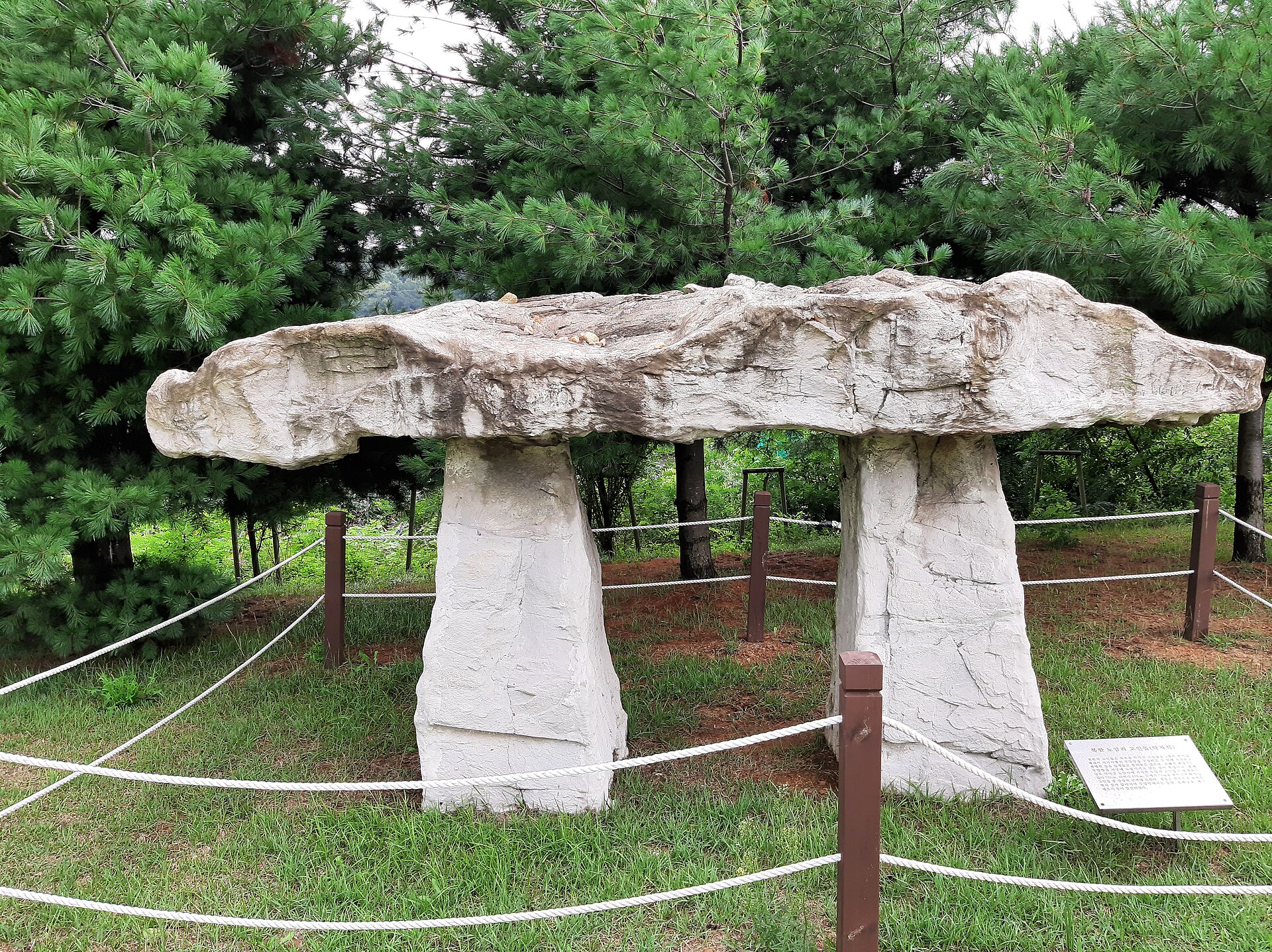
The Ganghwa Dolmen Site, the island's UNESCO-listed cluster of megalithic tombs, is served by local bus from Ganghwa-eup, with a ride of roughly 15 to 20 minutes. Departures are infrequent compared to the intercity line, so this leg needs its own buffer. The site itself, with its open field setting and the large capstone dolmen that anchors most photographs of the island, takes about 45 minutes to an hour to see properly, including the small attached exhibition hall. Visitors relying on buses should treat this as a half-day block: travel in, time on-site, travel out, rather than a quick stop.
What buses do not cover well
This is the honest limitation of a bus-only trip: Ganghwa's north coast, including sites near the inter-Korean border where the Han River estuary narrows, falls under restricted access. Some viewpoints and roads in these areas require advance permission or are only reachable with a permitted tour, and in a few sections a passport or ID check applies, with foreign nationals sometimes needing to arrange access differently than Korean citizens. Public buses do not reliably serve these restricted zones, and even where a route technically passes nearby, checkpoints and limited hours make spontaneous visits unrealistic. If the northern coast and its border-adjacent history are a priority, a rental car or organized tour is the more dependable choice, not the municipal bus network.
A realistic bus-based itinerary
For a single day: take the earliest comfortable intercity bus from Seoul, aiming to be in Ganghwa-eup by mid-morning. Spend an hour on the fortress remnants and town-center sites within walking distance. Take the local bus out to the dolmen site, allow roughly two hours round trip including the on-site visit, and return to Ganghwa-eup by mid-afternoon. This leaves a window for a late lunch and a second short stop, such as one of the town's Goryeo-period or 1871-related historical markers, before catching an intercity bus back to Seoul in the late afternoon or early evening. Pushing for more than this in a single car-free day usually means rushing, which undercuts the point of visiting a place with this much layered history.
Seasonal notes and timing
Winter days shorten the usable window considerably, with early sunset pushing the last comfortable return bus earlier than in summer. Spring and autumn weekends bring heavier traffic on the intercity route, adding 15 to 30 minutes to travel time. Buying a return bus ticket in advance is generally not necessary for the Seoul-Ganghwa intercity line, but checking the schedule board on arrival, rather than relying on an app that may lag behind real timetable changes, is the safer habit.
Ganghwa by bus works well for travelers focused on the town center and the dolmen fields, less well for anyone drawn to the restricted northern coast. Knowing that distinction before departure, rather than discovering it at a checkpoint, is what separates a smooth day trip from a frustrating one.