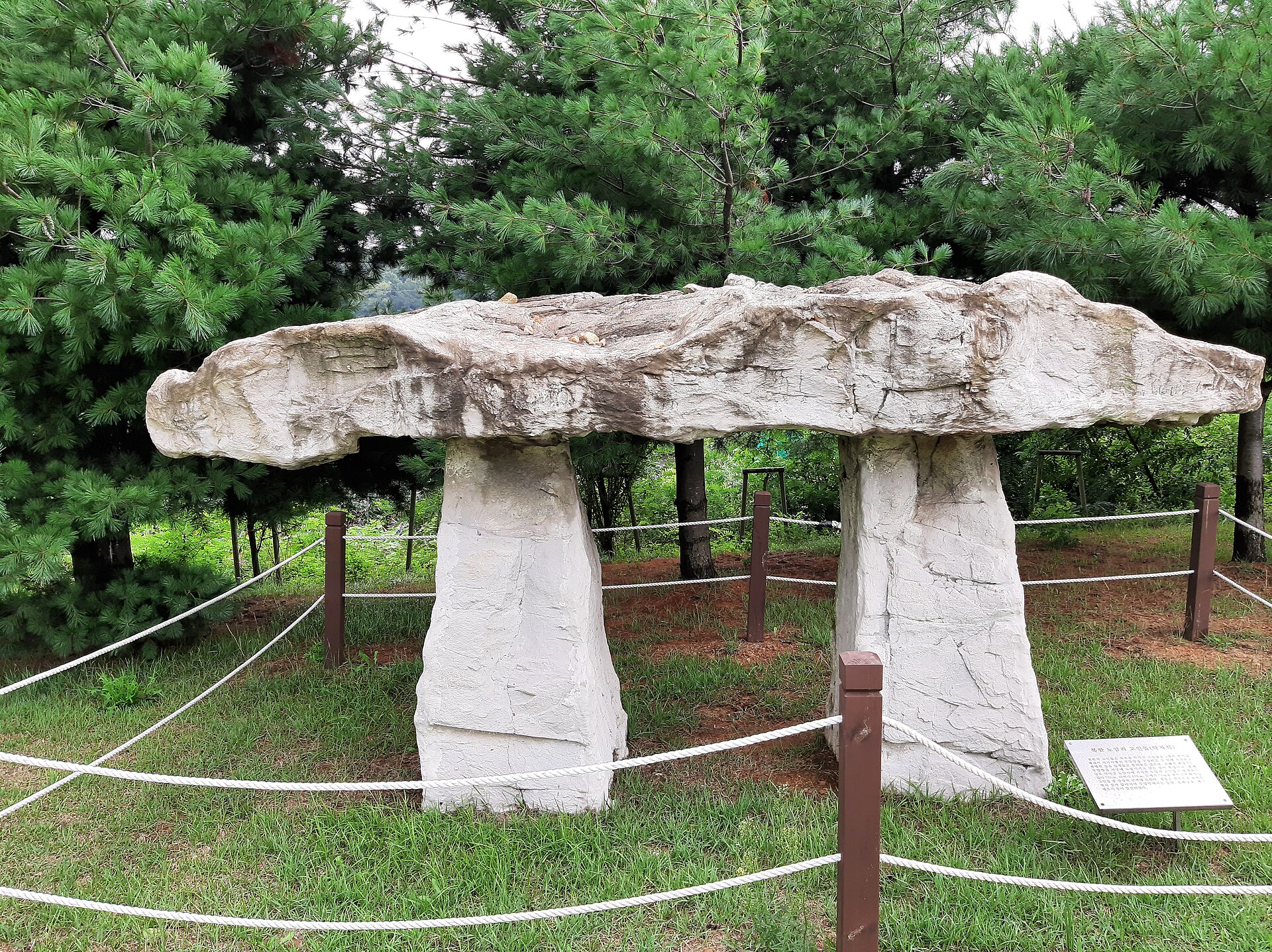
Mani-san is not a tall mountain by Korean standards, but it carries weight far beyond its 472 metres. At the summit sits Chamseongdan, a stone altar associated with Dangun, the founding figure of Gojoseon, Korea's earliest kingdom in national mythology. Every October, a ceremony is still held here, and the mountain draws hikers who want both a solid half-day climb and a direct, physical link to five thousand years of claimed history. The island's identity runs on exactly this kind of layering: dolmens in the fields below, a national founding myth on the ridge above.
Getting to the trailhead
Mani-san sits in the south of Ganghwa Island, roughly 40 to 50 minutes by car from Ganghwa town depending on traffic and which parking area you use. There is no rail link to the island at all, and bus service to the mountain's parking lots is infrequent, often running every hour or two depending on the day of the week, so check the day's schedule before relying on it. Most visitors arrive by car or taxi from Ganghwa-eup. If you are not driving, budget extra time and consider arranging a taxi for the return leg, since flagging one down at the trailhead on a quiet afternoon is unreliable.
Choosing a route
Two main trails lead to the summit. The route from the Mt. Mani-san tourist complex near Hwadocheon stream is the most common starting point, climbing roughly 2.3 km to the altar with a steep stone staircase section partway up that tests the knees more than the lungs. A second route starts near Jeongsu Temple and is slightly longer but less crowded on weekends. Both routes converge below the summit ridge. Allow two to two and a half hours up, and about 1.5 hours down, for a total hike of three and a half to four hours at a moderate pace, longer if you stop often for the sea views that open up once you clear the treeline.
What you find at Chamseongdan
The altar itself is a modest stone platform, rectangular at the base and circular at the top, enclosed by a low wall. Visitors cannot walk onto the altar itself; viewing is from just outside the perimeter. There is no admission fee to approach it, though the national park-style entry to the Mani-san area may involve a small parking charge, typically a few thousand won. The real reward is less the structure than the position: on a clear day you can see across the tidal flats toward the Yellow Sea and, on the clearest days, toward the North Korean coastline, a reminder of how close this island sits to the inter-Korean boundary.
Start by 10am if hiking in summer to avoid midday heat on the exposed upper ridge. In winter, the stone steps near the summit can ice over; trekking poles and grip attachments for your shoes are a reasonable precaution rather than overkill.
Season and conditions
Spring (April to May) and autumn (October to November) are the most comfortable windows, with mild temperatures and good visibility. Autumn also brings the annual Gaecheonjeol ceremony at the altar, held around National Foundation Day in early October, when the site briefly becomes a ritual space rather than just a viewpoint, worth checking the calendar for if you want to see it rather than simply pass through. Summer hiking is possible but humid, and the exposed stretch near the top offers little shade. Winter hiking is quieter and the air is often clearer for long-distance views, but daylight is short, so plan to finish well before dusk.
Practical notes before you go
Wear proper hiking shoes: the staircase sections have uneven stone and can be slick after rain. Bring your own water, at least one litre, since there are no reliable vending points once you leave the base area. Toilets exist near the main parking area but not along the trail itself. Mobile signal is generally fine throughout, which is reassuring given how exposed parts of the upper trail are. There is no overnight camping or shelter on the mountain, so this is strictly a there-and-back day hike. If you are combining Mani-san with other island sites in a single day, such as the dolmens near Ganghwa town or the Goryeo-era fortifications along the coast, build in a buffer, since the hike alone can take half a day once travel to and from the trailhead is included.
Why the altar matters
Chamseongdan is dated, by tradition rather than archaeology, to the era of Dangun himself, making it one of the oldest continuously referenced ritual sites associated with Korean national founding. Whether or not one reads the foundation myth literally, the altar has functioned as a real ceremonial site for centuries, and its continued use each October ties Ganghwa Island directly into the modern national calendar. Combined with the island's dolmens and its later Goryeo and 19th-century fortifications, Mani-san forms one more layer in what is a genuinely five-era landscape: a short, steep climb that puts the island's deep history under your own feet rather than behind a museum case.